Storm & Urgent Situations
When Does a Leaning Tree Become an Emergency?
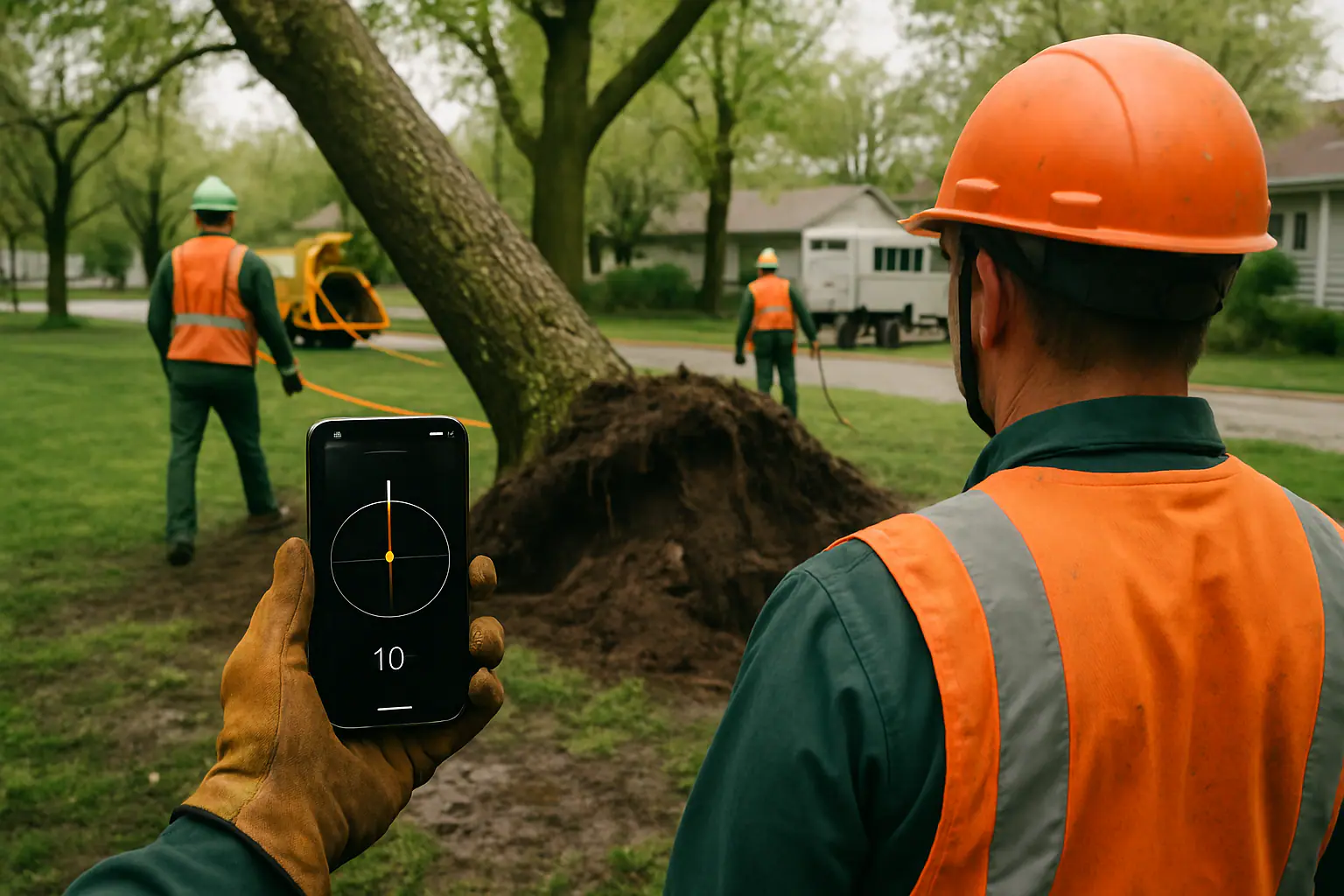
A leaning tree becomes an emergency when the lean is new or worsening — signaled by soil heaving at the base, exposed or snapping roots, or ground cracking on the side away from the lean. Slow leans that developed over decades are different animals entirely; sudden ones mean the root system is actively failing.
The Three Signals of Active Failure
- 1Soil disturbance: mounding or cracking on the side opposite the lean means the root plate is rotating upward — the tree is mid-topple in slow motion
- 2Exposed or breaking roots: roots popping from soil audibly or visibly confirm active movement, not settled history
- 3Progression between observations: a tree noticeably more leaned than last week is measuring its own decline for you
Any one of these, especially with targets in the fall radius — houses, roads, play areas — warrants immediate professional assessment. Keep people clear of the fall zone meanwhile; root-plate failures accelerate unpredictably, particularly when soils dry and shrink after the saturating rain that started them.
Benign Leans vs. Warning Leans
Trees growing toward light gaps develop permanent curvature — thick, buttressed trunks compensating deliberately. That architecture took years and holds indefinitely. Warning leans look different: straight trunks tilted recently, uniform taper unchanged, sitting in soil that moved. Species matter too — shallow-rooted types (silver maple, cottonwood, birch, spruce) tip more readily than deep-rooted oak and walnut, so identical tilts carry very different meanings depending on what's tipping.
What Triggers Sudden Leans in Missouri
- Saturation events: extended rain floats root plates in liquefied clay — the classic post-wet-spell lean
- Wind loading on saturated soils: the combination that drops trees that survived individual worse winds in drier ground
- Root cutting: recent trenching, digging or grade changes severing anchorage
- Adjacent tree loss: removing the shelterbelts that blocked prevailing winds redirects full force onto formerly protected trees
- Decay advance: internal rot reaching the point where trunk strength no longer offsets modest leans
What Happens During Assessment
Evaluation covers lean angle and progression evidence, root plate condition, soil moisture state, trunk integrity, crown sail area and — decisively — what stands in the fall radius. Outcomes range from monitoring with a marked plumb reference, through corrective pruning reducing wind load, to planned removal before nature schedules it. Cabling occasionally suits valuable trees with partial root compromise, though it buys time rather than fixes cause.
Around Lexington and throughout Lafayette County, assessments start with a call to (855) 714-0391. For broader context, our unsafe tree warning signs guide covers the full spectrum beyond leans alone.