Seasonal Prevention
10 Warning Signs of an Unsafe Tree
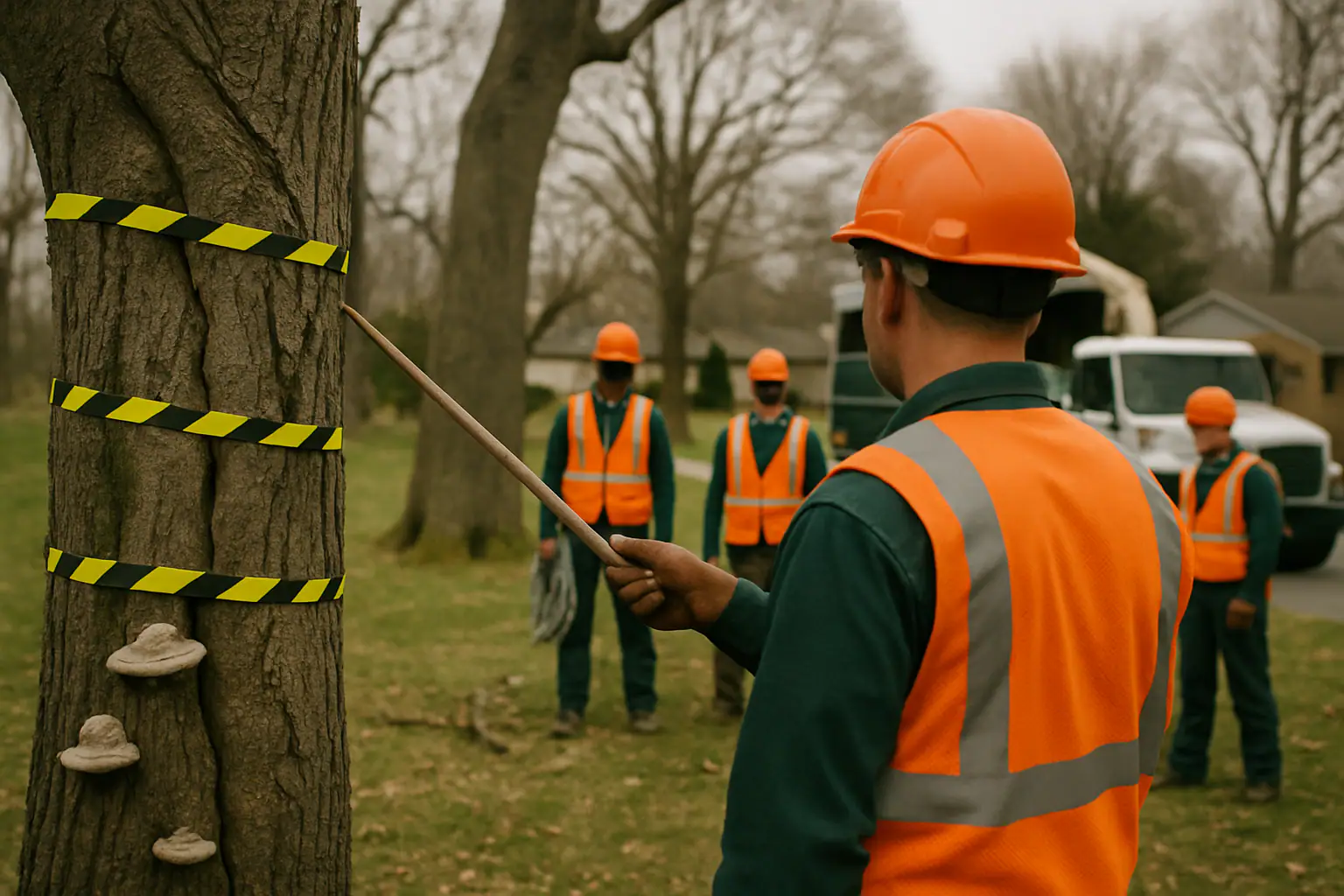
The ten warning signs of unsafe trees are: vertical trunk cracks, deep cavities, new or worsening lean, root-zone movement, fungal conks on trunk or roots, hanging broken limbs, widespread crown dieback, included-bark major crotches, previous partial failures, and soil heaving after wet periods — any single sign warrants assessment; combinations demand it.
Signs One Through Five: Trunk and Root Signals
- 1Vertical trunk cracks: seams running down stems propagate mechanically under each load cycle — especially serious between co-dominant leaders
- 2Deep cavities: hollows exceeding roughly a third of trunk diameter compromise structural math regardless of external vigor
- 3New/worsening lean: recent tilt changes mean active failure processes, categorically different from decades-old stable curves
- 4Root-zone movement: lifting soil plates, snapping anchor roots, ground cracking opposite the lean — the tree is rotating now
- 5Fungal conks: shelf mushrooms on trunks or buttress roots mark extensive internal decay invisible above them
Signs Six Through Ten: Canopy and History Signals
- 1Hanging limbs: broken branches suspended overhead — "widowmakers" earning the name annually
- 2Crown dieback spreading: top-down thinness progressing season over season signals root/vascular decline underneath
- 3Included-bark crotches: bark-pinched V-forks between major stems — ice-storm splitting waiting for schedule
- 4Previous partial failures: once-broken trees carry permanently compromised attachment zones; repeat performances follow
- 5Post-rain heaving: saturated-soil tilting episodes that recover visually but weaken anchorage permanently
Scoring What You Find
- One isolated sign + low targets: professional evaluation at normal scheduling pace
- Any sign + high targets (structures, paths, parking): prompt assessment — days not months
- Multiple signs combining: stop evaluating personally; professional hazard assessment immediately
- Signs plus recent weather loading: urgency multiplies — post-storm inspections catch what calendars miss
Why Self-Diagnosis Has Limits
Ground observation catches exterior signals; interior conditions stay hidden until sounding, resistograph readings or decay exploration reveal them. Professionals weigh species-specific failure patterns too — brittle species judged harsher than sturdy ones given identical appearances. The checklist's job isn't replacing assessment; it's telling you when assessment has become non-optional. Lafayette County evaluations run through (855) 714-0391. Companion reading: dead branch identification and lean emergency thresholds.