If you have a dead, leaning, storm-cracked or just badly placed tree, call (855) 714-0391 for an assessment and a straight quote on taking it down safely.
When a Tree Should Come Out
- The tree is dead or clearly declining — thin crown, bark sloughing, fungal conks on the trunk
- A storm crack or split has opened in the main stem or a major limb attachment
- The tree leans increasingly after wet soil periods, especially with heaving roots
- Roots are lifting foundations, drives, septic lines or water meters beyond repair
- The species was a bad choice for the spot — a cottonwood over the septic field, a silver maple over the bedroom
- Construction, a new driveway or a building addition requires the space
Not every questionable tree deserves the chainsaw. Where a tree is structurally sound, pruning or targeted trimming often solves the problem for less money and keeps the shade. We'll say so when it's true — removal recommendations here aren't upsells.
How We Take Trees Down Near Homes
- 1Assessment: lean, weight distribution, targets below (house, shed, fence, power drop), and the drop zone available
- 2Plan: which sections come off first, rigging points, ground-protection path for equipment, escape routes
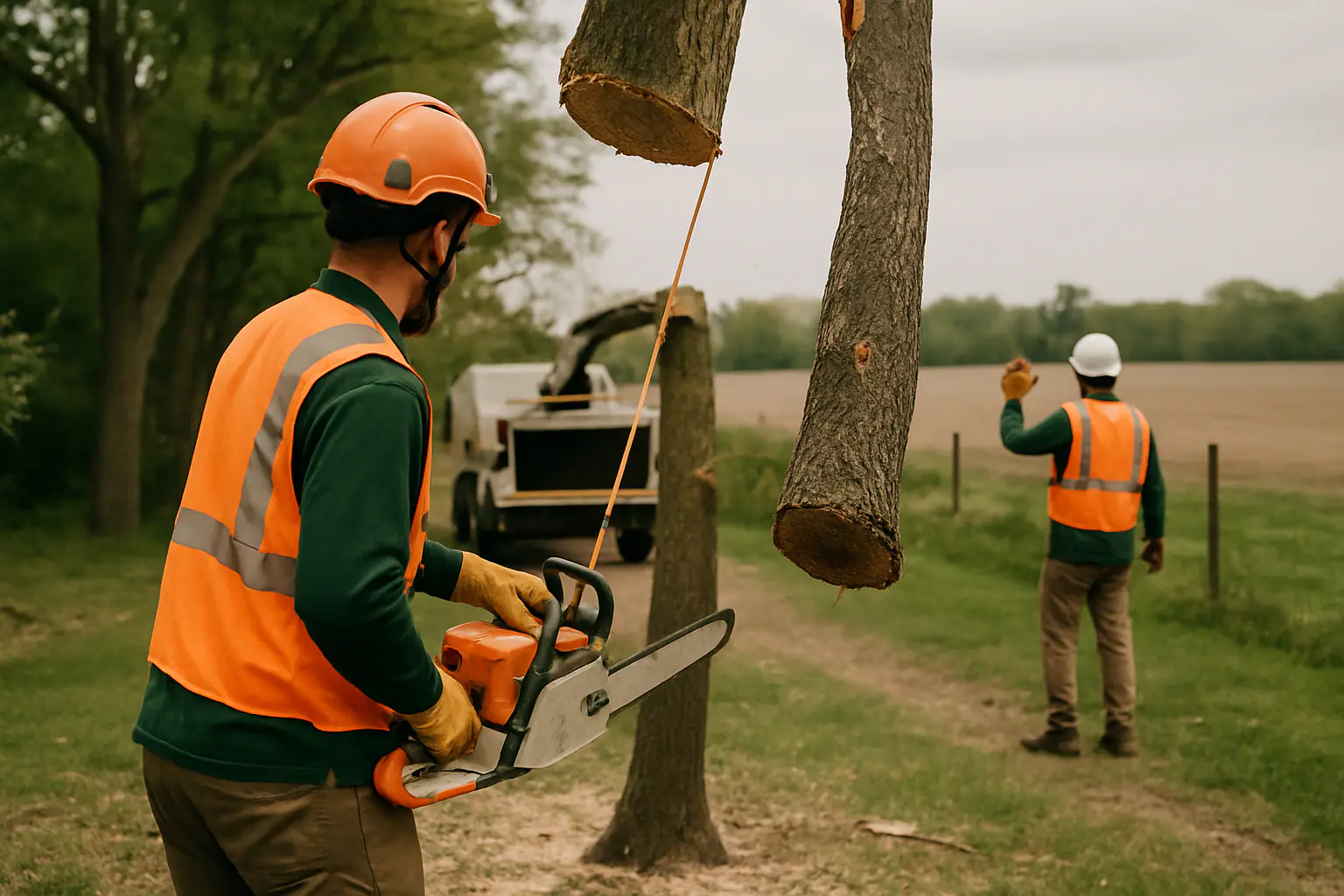
- 3Sectional dismantling: the crown comes off piece by piece, limbs lowered on ropes rather than free-fallen near structures
- 4Trunk work: the stem is cut down in manageable lengths, stacked or hauled per your preference
- 5Stump finishing: grind now or later — see stump grinding
- 6Cleanup: brush chipped or loaded, yard raked, gates closed, nails-free lawn handed back
Removal Pricing Factors in Lafayette County
Four factors drive almost every removal quote: height and trunk size, proximity to structures and utilities, lean and condition (a hollow trunk changes how it must be cut), and debris handling (haul-off vs. keep-the-wood). Access matters too — a tree behind a narrow gate with no truck access takes more labor than one an open field away. This is why phone quotes without seeing the tree are guesses, and why our quotes itemize what you're paying for.
Dead Ash and Storm-Cracked Trees Are Time-Sensitive
Emerald ash borer has reached Lafayette County, and ash trees typically decline fast once infested — becoming brittle and unpredictable to climb within a couple of years of death. The same applies to storm-cracked stems: each wind event loads the split further. If you suspect either situation, don't sit on it for another season. See our pages on dead tree removal and removals near buildings, or just call and describe what you're seeing.
Tree Service in Nearby Communities
- Tree Removal in Corder, MO
- Tree Removal in Lafayette County, MO
- Tree Removal in Lexington, MO
- Tree Removal in Odessa, MO