Business & Property Managers
When Should a Property Manager Remove a Tree?
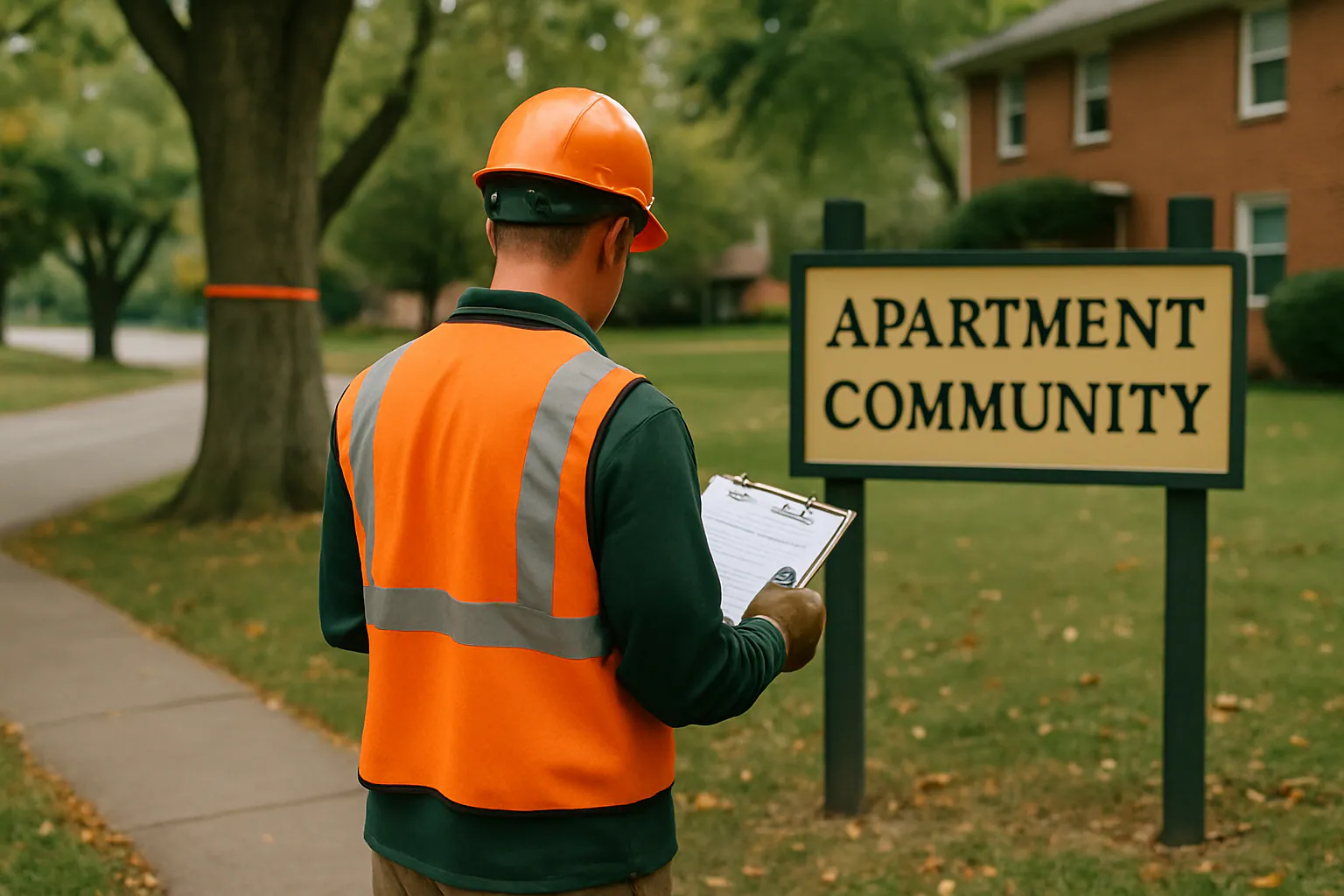
Property managers should authorize tree removal when documented condition problems meet meaningful target exposure — specifically hazard-sign combinations, fatal-disease confirmations, chronic maintenance economics, or construction displacement — and never before assessment establishes those facts. The framework protects both budgets and tenants.
The Four-Input Decision Matrix
- 1Condition: what does professional assessment say about structure, health and trajectory? Findings anchor everything downstream
- 2Targets: what does failure actually hit? Parking rows, walkways, units, neighboring structures rank exposure honestly
- 3Cost trajectory: recurring intervention totals versus one-time removal plus replacement — five-year math usually clarifies chronic cases
- 4Documentation posture: what does the file support if events precede action? Assessment records cut both directions
Clear-Cut Removal Triggers
- Multiple [unsafe-tree signs](/blog/dangerous-tree-warning-signs/) coexisting on any tree near occupied areas
- Confirmed EAB-infested ash anywhere tenants park or walk beneath — brittleness timelines make deferral expensive
- Repeated major limb failures regardless of remaining canopy appearance
- Root infrastructure conflicts — foundations, laterals, paving requiring engineering solutions trees cannot survive
Situations Arguing Against Removal
- Healthy sturdy trees with manageable defects — pruning solves what anxiety would remove
- Complaint-driven pressure without condition basis — "it's messy" isn't a hazard finding
- Screening and storm-buffer functions whose loss creates new problems (exposure, privacy, drainage)
- Historic or significant specimens deserving expert evaluation before chainsaw conclusions
Process Discipline Worth Copying
- 1Assessment first, always — written findings scoped per tree
- 2Insurance verification current before authorizing work (commercial service standards)
- 3Tenant communication proactive — notice periods, parking impacts, noise windows
- 4Replacement planning simultaneous — canopy loss affects leasing appeal; phased replanting maintains asset value
- 5File completion immediately — assessments, quotes, invoices, photos archived per address
Budgeting Reality
Portfolio managers succeed by normalizing tree budgets annually rather than reacting to surprises: inspection cycles catch problems small, planned removals schedule off-peak, replacements phase predictably. Properties running that model spend less than reactive neighbors essentially always. Multi-property coordination across Odessa, Warrensburg and surrounding markets starts at (855) 714-0391. Related: rental-specific risk management.