Business & Property Managers
Tree Cleanup Planning for HOAs and Managed Properties
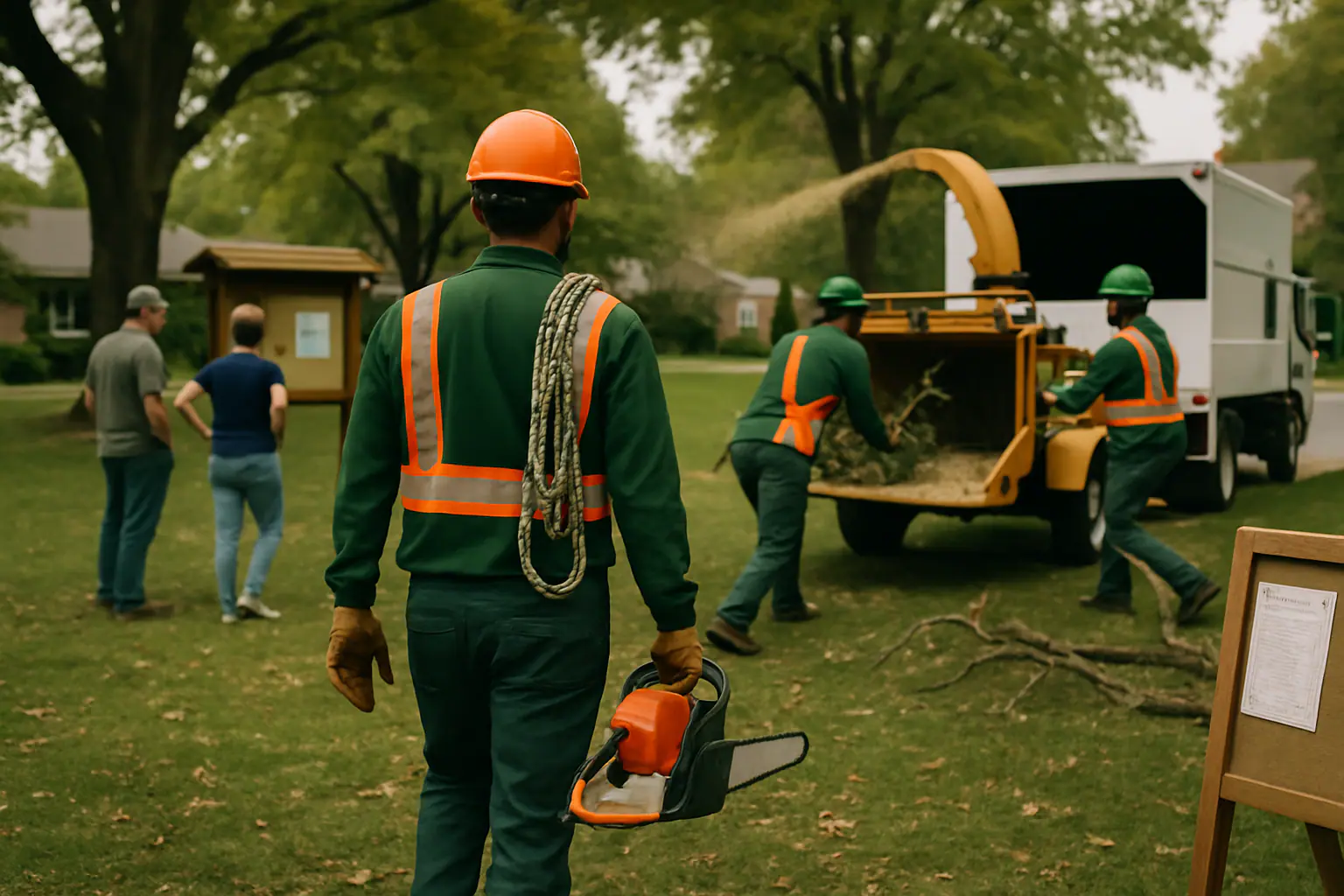
Successful HOA tree cleanup programs share four elements: an annual plan adopted before storm season, written service standards preventing scope disputes, consolidated vendor scheduling controlling costs, and proactive resident communication defusing complaints before they reach board meetings. Communities lacking those elements meet their trees during emergencies instead.
Element One: The Annual Plan
- 1Inventory common-area trees by zone with condition notes — even simple spreadsheets transform planning
- 2Schedule inspection cycles spring and fall minimum, documented findings per zone
- 3Budget maintenance separately from reserves so routine work never competes with capital projects
- 4Pre-authorize emergency thresholds defining what vendors may execute immediately versus what awaits approval
Element Two: Written Standards
- Clearance specifications: paths, drives and sight lines with actual numbers attached
- Cleanup definitions: rake-level finish, chip disposal, wood handling stated explicitly
- Timing windows: noise-generous hours, seasonal restrictions, event-avoidance dates
- Insurance requirements: verified certificates current before any crew rolls (commercial documentation standards)
Element Three: Consolidated Scheduling
Communities coordinating entire neighborhoods into planned visits capture meaningful economics versus unit-by-unit chaos: mobilization spreads across volume, debris routes consolidate, and consistent standards apply uniformly. Storm-debris events especially reward pre-existing relationships — established vendors return calls; new ones return invoices. Regional coverage around Odessa and Lafayette County communities operates exactly this consolidation model.
Element Four: Communication That Prevents Meetings
- Advance notices stating what, where, when and why — before crews appear
- Visual documentation of hazard findings justifying visible work like removals
- Contact channels for concerns routed to responders rather than neighbors' resentment
- Post-work summaries closing loops publicly — transparency starves speculation
Storm-Debris Playbook
- 1Safety sweep immediately — blocked exits and hung hazards before aesthetics always
- 2Activate pre-authorized thresholds for urgent mitigation without waiting for quorums
- 3Document damage comprehensively — insurance conversations follow weather events predictably
- 4Schedule consolidated cleanup through standing vendor relationships rather than door-to-door desperation
- 5Communicate timeline honestly — realistic estimates beat optimistic ones that generate follow-up complaints
Program reviews and setup consultations run through (855) 714-0391. Companion frameworks: business liability reduction and parking-lot trimming specifics.