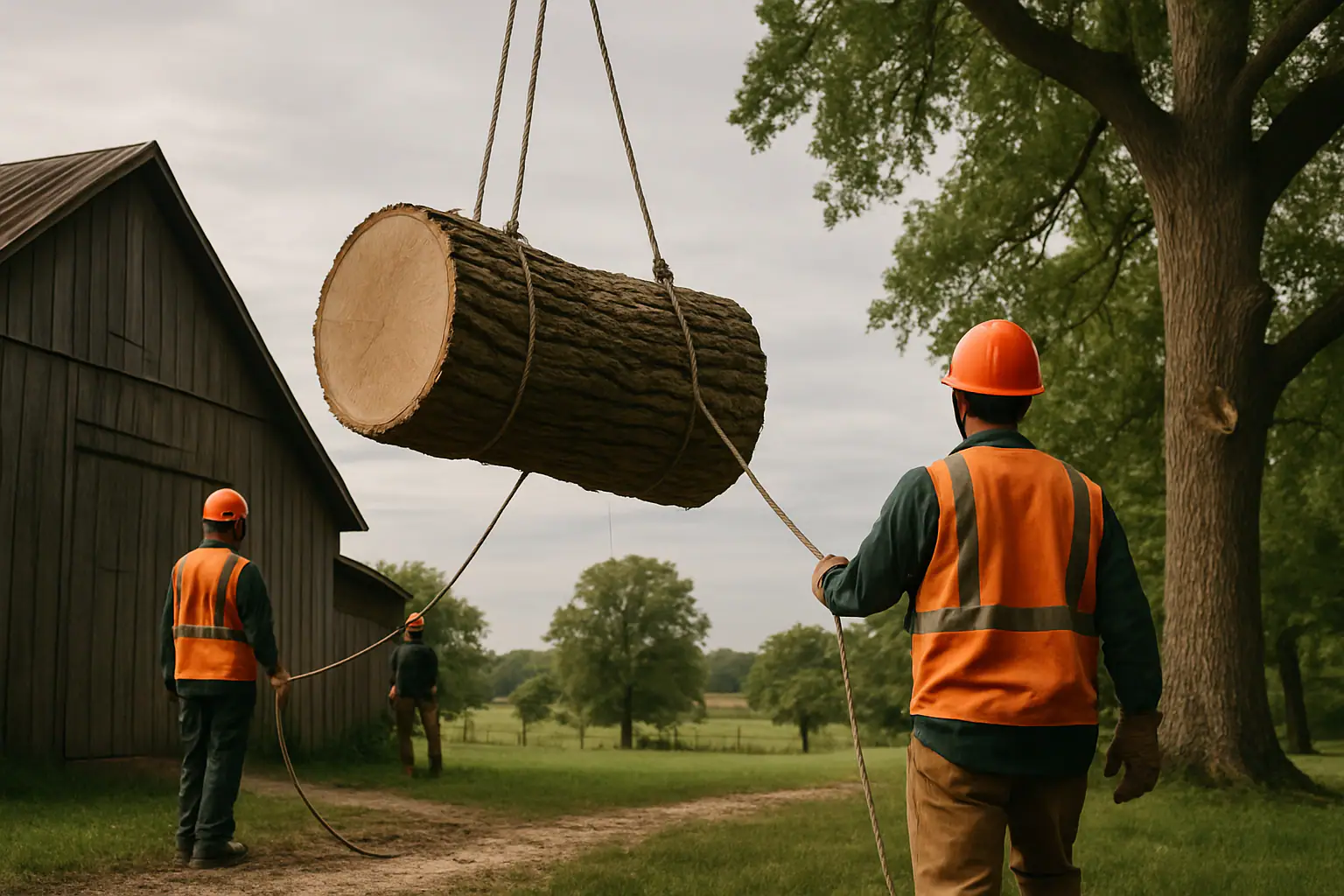
If your tree towers past the roofline with a trunk wider than the saw you own, stop reading and call (855) 714-0391. This is the work that deserves professionals.
What Makes a Removal "Large"
Usually one or more of these: height beyond comfortable ladder-and-pole range, trunk diameter requiring multiple cuts per section, weight per limb measured in hundreds of pounds, or canopy spread covering most of a yard. Farmstead cottonwoods around here routinely hit 90+ feet. Old bur oaks spread wider than barns. Each brings different physics — tall-and-thin wants careful hinge work, wide-and-heavy wants systematic sectional dismantling from the outside in.
How Sectional Dismantling Works
- 1Load-path planning: every cut anticipated — where pieces swing, land, and how ropes absorb their weight
- 2Crown reduction from the tips: outer limb mass comes off first so the framework is manageable
- 3Rigged lowering: heavy sections tied, cut, and lowered to ground crews who process them immediately
- 4Stem sectioning: trunk cut in lengths sized for safe handling, free-falling only where a clear drop zone genuinely exists
- 5Continuous processing: brush chipped and logs staged as work proceeds — no mountain of debris at quitting time
- 6Stump finishing and final rake-out per your plan
Equipment and Crew Reality
Big removals are crew jobs — climbers, ground hands, chippers running — with professional-grade rigging hardware, not farm-truck improvisation. Customers on review platforms regularly mention the equipment difference between professional operations and the alternative. Whether a specific giant needs crane assistance is decided per job; many large removals are handled entirely with climbing and rigging when drop zones allow. Either way the plan is explained before cutting starts, and the price reflects the actual method required — not a guess made from your porch.
Where Large Trees Go Wrong in DIY Hands
Barber-chairing (trunk splitting upward mid-cut), limbs heavier than expected pivoting off stumps, and misread leans are the classics — and they're why emergency rooms see this work annually. Add structures, fences and livestock in range and the math gets worse. There's no shame in the honest version: fell the small stuff yourself if you enjoy it, and bring in crews for anything whose failure would cost more than the quote.
Pricing the Big Ones Honestly
Height, diameter, lean, proximity to obstacles, debris handling and access combine into the quote — a lone cottonwood in an open field prices completely differently from the same tree wedged between a house and a grain bin. Read our breakdown of Lafayette County removal costs, or skip ahead: call (855) 714-0391, describe the giant, and get a real assessment scheduled.
Tree Service in Nearby Communities
- Large Tree Removal in Corder, MO
- Large Tree Removal in Lexington, MO
- Large Tree Removal in Waverly, MO
- Large Tree Removal in Lafayette County, MO