Lafayette County Local
How Wind Exposure Affects Trees on Rural Missouri Properties
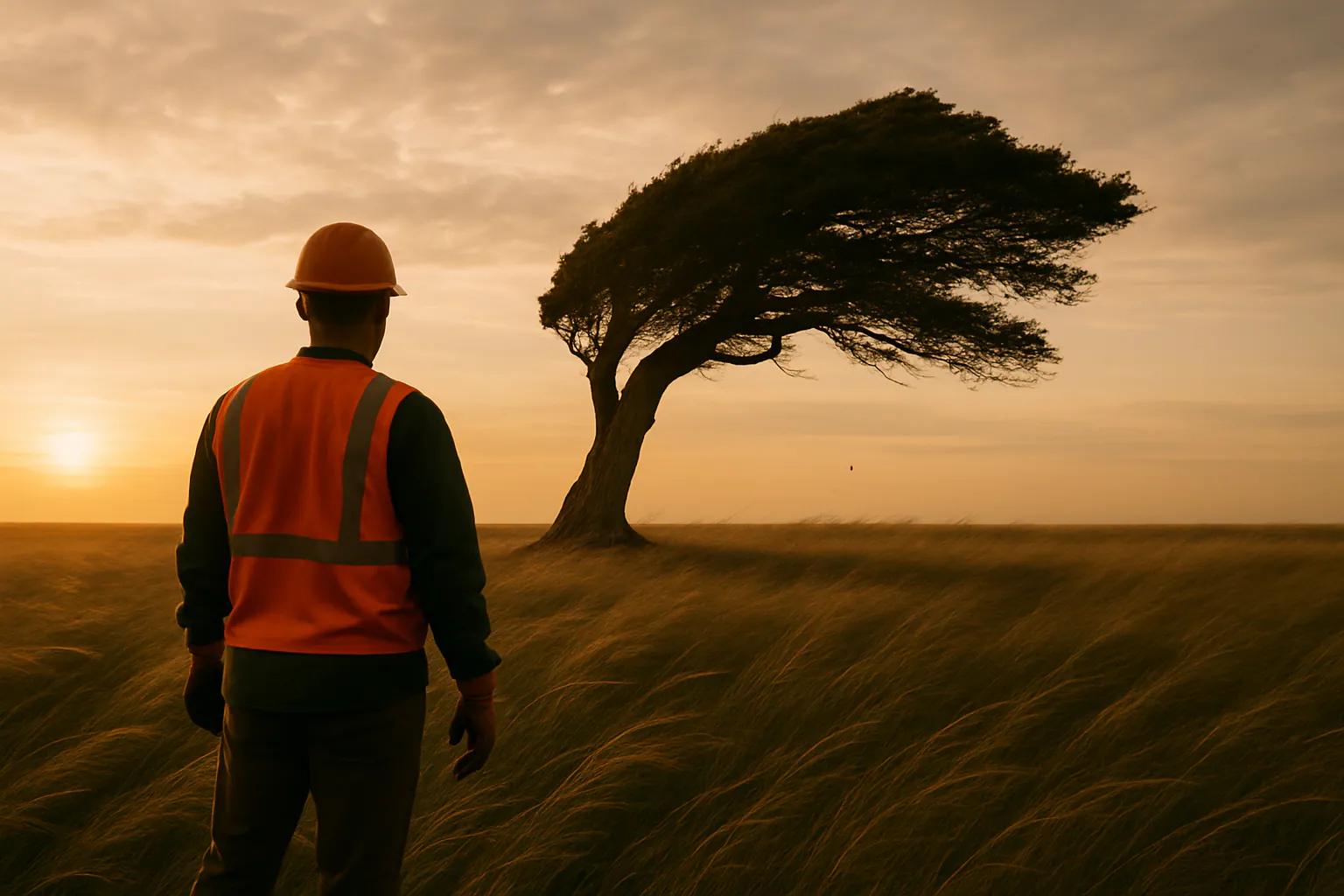
Rural open-field exposure changes everything about trees: growth redirects leeward, anchorage compensates visibly, storm loading multiplies, and species that thrive sheltered fail exposed. Understanding those changes explains most "sudden" rural tree failures nobody predicted.
What Constant Wind Does to Tree Architecture
- Flag-forming: persistent prevailing winds prune leeward growth hormonally, sculpting asymmetric crowns pointing away from load
- Shorter, thicker trunks: exposure stunts height while thickening support — trees built stocky by necessity
- Root asymmetry: anchorage concentrates against dominant wind direction, leaving other quadrants comparatively weak
- Accelerated desiccation stress: constant air movement drains moisture, compounding drought years disproportionately
Why Exposed Trees Fail Differently
Sheltered grove trees share loads communally; isolated yard and field-edge trees bear everything individually. Failure patterns follow: stem twist-breaks (spiraling fractures) appear where trunk torsion exceeded wood tolerance; complete root overturns happen where saturation met full individual loading; and leeward-limb strip-out occurs when gusts finally exceed decades of one-directional adaptation. Direction matters — failures overwhelmingly orient toward historical prevailing winds.
Property Features That Multiply Exposure
- 1Field edges: first-row trees eat unobstructed prairie fetch
- 2Hill crests: velocity increases with elevation over open ground
- 3Recent clearings: removing neighboring shelter redistributes former protection onto survivors — delayed-failure surprises follow logging and lot clearing by years
- 4Valley alignments: terrain funnels regional winds into local jets along draws and drainages
Countermeasures That Actually Work
- Crown thinning: reducing sail area lets gusts pass — highest-return intervention for exposed keepers (pruning service)
- Weight reduction on leeward limbs: addressing where loading actually concentrates
- Phased windbreak renewal: maintaining continuous function while replacing failed sections gradually
- Post-clearing reassessment: whenever nearby removals change wind paths, survivors deserve fresh evaluation
Properties around Alma, Mayview and similar open-country settings live these dynamics constantly. Assessments translating exposure into specific recommendations: (855) 714-0391. Extended reading: storm physics behind limb breaks.