Tree Care Guides
Tree Too Close to Your House? Here’s What to Check
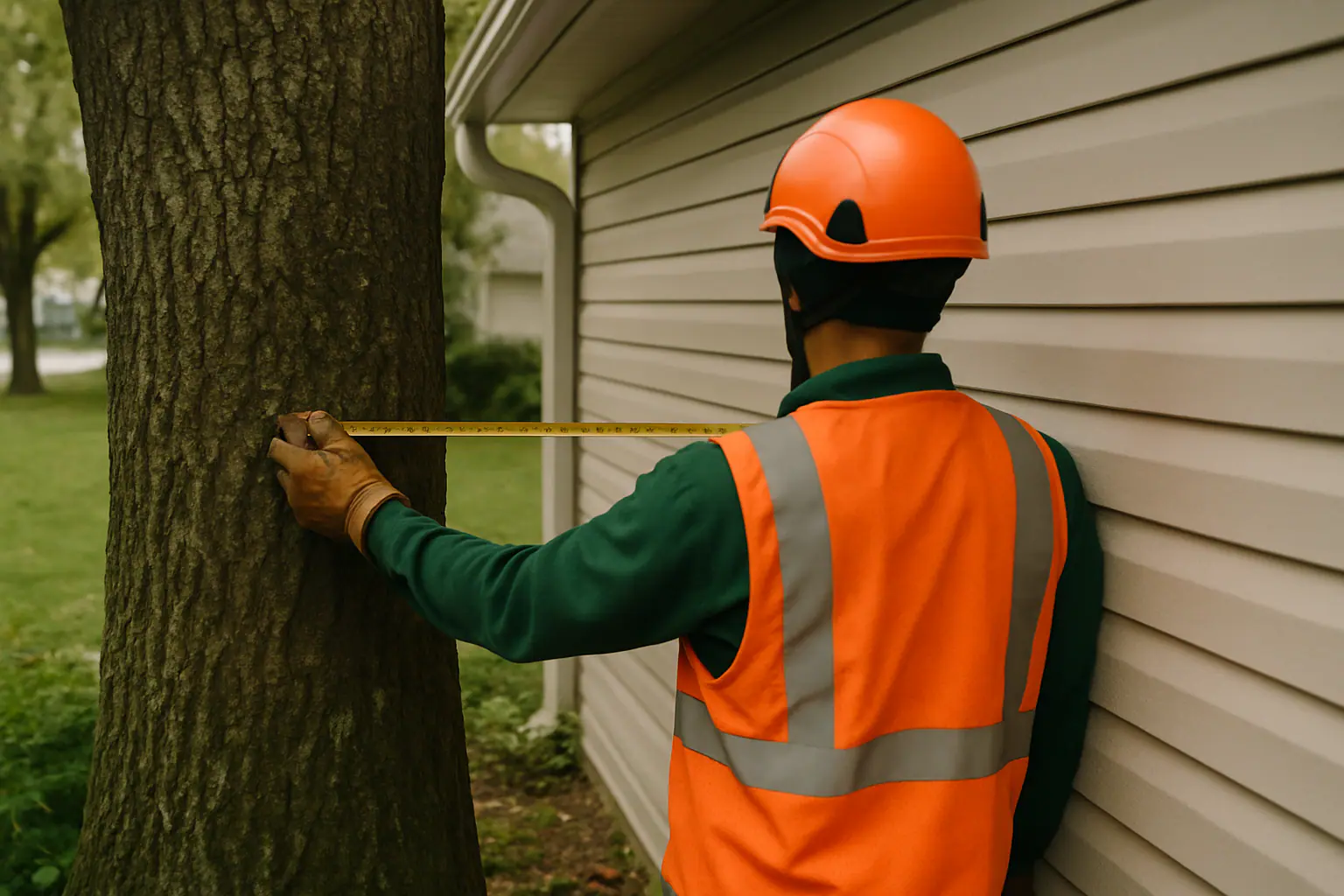
A tree close to your house warrants systematic evaluation across six factors — species behavior, lean direction, actual canopy overlap, root zone interaction, current health and future access — because proximity converts small problems into expensive ones but doesn't automatically demand removal.
Check One: Species Behavior Near Structures
- Higher-risk neighbors: silver maple, cottonwood, willow, Siberian elm — brittle woods and aggressive roots compound proximity costs
- Manageable neighbors: white oak, bur oak, walnut, honey locust — sturdy structures tolerate closeness better
- Invasive-root caution: poplars, willows, silver maples near septic fields and water lines create subsurface expenses regardless of crown behavior
Check Two: Lean Geometry
Leaning toward the house multiplies risk beyond any chart; leaning away reduces it equally. Combined with root-plate signals (mounding, cracking), lean direction becomes decision-dominant. Our leaning-tree guide covers the urgency thresholds in detail.
Check Three: Real Canopy Overlap
Measure actual overhang: branches directly above roof mean eventual contact, gutter occupation and shingle abrasion — plus storm-loading directly onto structure. Overhang also determines whether maintenance requires rigging (expensive recurring) versus ground-pole work (affordable recurring).
Check Four: Root Zone Interaction
Roots extend roughly to canopy drip lines and beyond. Foundation-distance guidelines vary by species aggressiveness — general rule: large aggressive-rooted species want 15+ feet from foundations; moderate species manage at 10; smaller ornamentals coexist closer. Signs demanding investigation: lifted walks, cracked drives, plumbing backups, doors suddenly sticking seasonally.
Check Five: Current Health Status
Close-plus-unhealthy changes everything: a declining tree near walls loses management options progressively since pruning assumes vigor worth preserving. Ash trees specifically deserve EAB evaluation given countywide presence — declining ash near houses convert to scheduled removals sooner than their distance alone would suggest.
Check Six: Future Access Reality
Eventually someone removes this tree — age guarantees it. Can equipment reach that future job without demolishing fences or squeezing through impossible gaps? Planning access now (selective limb removal creating work corridors, gate modifications) costs fractions of crisis-mode alternatives.
Decision Framework
- 1Healthy sturdy species, leaning away, manageable overhang: keep with disciplined maintenance cycles
- 2Brittle species or concerning lean or major overhang: professional assessment weighing reduction options against replacement planning
- 3Multiple red flags combining: removal scheduling beats waiting — proximity pricing compounds with hazard premiums
Around Odessa and greater Lafayette County, these assessments happen routinely — (855) 714-0391 starts them. Deeper prevention reading: protecting trees around structures.