Costs & Insurance
Who Pays When a Neighbor’s Tree Falls on Your Property?
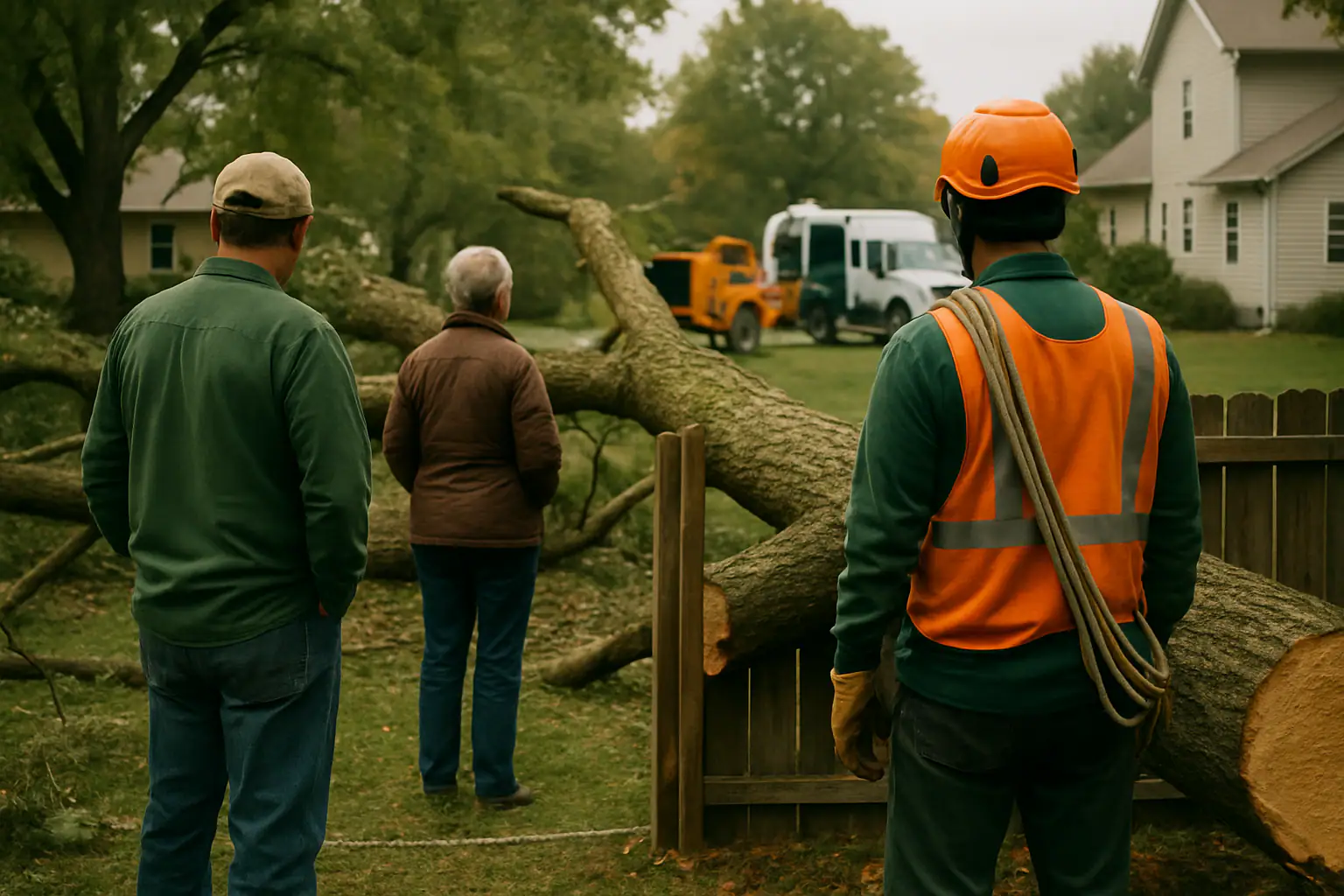
In Missouri, when a healthy neighbor's tree falls onto your property in a storm, your own homeowners insurance typically pays your damages — no fault assigned. When the tree was demonstrably dead or hazardous and documented complaints existed beforehand, negligence claims against the neighbor become viable. Most cases resolve through the first path without lawyers.
The Act-of-God Default
Missouri law treats storm-felled healthy trees as insurable events, not torts — owners aren't guarantors of living trees against unusual weather. Your dwelling policy responds to your structure damage; theirs responds to theirs. Cross-boundary blame games delay repairs without changing who ultimately pays, because both sides' carriers priced regional storms into premiums long ago.
When Negligence Changes Everything
- Documented dead/hazardous condition: dated photos, written notices, contractor assessments warning the owner pre-failure
- Actual knowledge plus inaction: complaint letters ignored become evidence trails
- Obvious neglect patterns: years-visible dead tops, fungal conks, severe leans nobody addressed
Under such conditions, subrogation — your insurer recovering from the negligent party — becomes realistic, and direct claims survive independently. The evidentiary lesson cuts both directions: documenting hazards protects you whether you're the threatened neighbor or the eventual defendant.
Boundary and Overhang Questions While Trees Still Stand
Missouri follows common-law self-help principles: you may trim branches crossing your property line back to the boundary — at your expense, without damaging the tree, and without trespassing to do it. Roots encroaching similarly. What you cannot do is enter their property uninvited, kill the tree through poisoning dressed as pruning, or demand they remove a healthy tree merely because it overhangs. Boundary trees owned jointly require mutual consent for removal — get agreements written before cutting shared trunks.
Practical Resolution Sequence After Falls
- 1Safety and documentation first — identical to any tree fall, ownership notwithstanding
- 2File with your own insurer promptly, mentioning the tree originated next door for their files
- 3Preserve evidence of prior condition if hazards were visible — photos neighbors posted, texts exchanged
- 4Let carriers negotiate subrogation rather than personal confrontation souring decades of fence-line relations
- 5Reserve legal consultation for denied-but-deserving negligence cases above deductible-scale losses
One preventive note serving both sides of any fence: professional assessments create paper trails establishing due diligence. If a questionable tree overhangs your structures, requesting the neighbor permit evaluation costs nothing and builds the record either direction. We provide such assessments throughout Lafayette County — call (855) 714-0391. Related: fallen-tree insurance mechanics.